


Most buyers tour a home online before they ever book a showing. A 360 virtual tour is the version of that first tour the buyer controls: they move room to room, check the layout against the floor plan, and decide in minutes whether the listing earns a visit.
This guide covers how a 360 tour is captured, what it should include, what it costs, and where it has to appear to do its job — on the listing itself, on Zillow, and on StreetEasy. Listing3D is an approved vendor for 3D tours on Zillow and StreetEasy, and this is the format we deliver every day for brokerages in New York, Boston, and other major markets.
How Real Estate 360 Virtual Tours Work
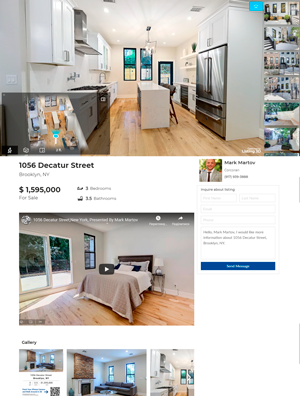
A 360 virtual tour, also known as a panoramic virtual tour, is the depiction of a property in 360 degrees. It’s made up of a number of static photos of that property collaged into a panorama. Most modern real estate businesses use it for marketing their listings online.
Virtual tours are not a new phenomenon — real estate agents have always used photography and videos to give their clients a glimpse of the properties they’re selling. Nevertheless, neither was as advanced as today’s panoramic virtual tours.
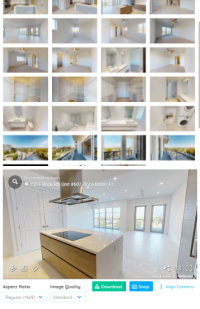
Modern 360-degree real estate virtual tours are created with laser-scan cameras and high-tech software. The realtors or virtual tour providers place the cameras around the space they want to scan. Once on, the cameras rotate, collecting spatial data from all corners of the property. The data is then uploaded using software that joins them into a spherical scene.
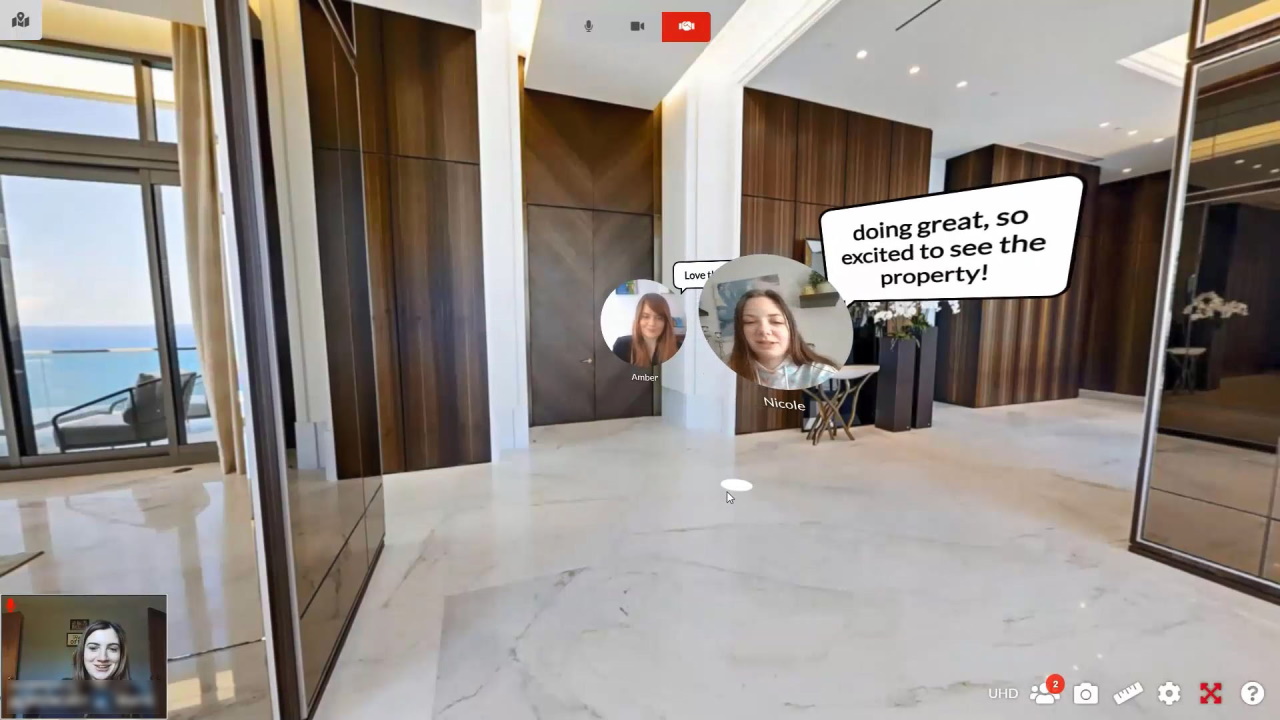
Thanks to this unique design, the photos make viewers feel like they’re physically present at the location. Through them, spectators can virtually move around the room in any direction, using only their computers or mobile phones.

Features of Real Estate 360 Virtual Tours
Not all real estate virtual tours are the same: each type is characterized by a few specific features. We’ve listed and explained the most relevant ones in the paragraphs below:
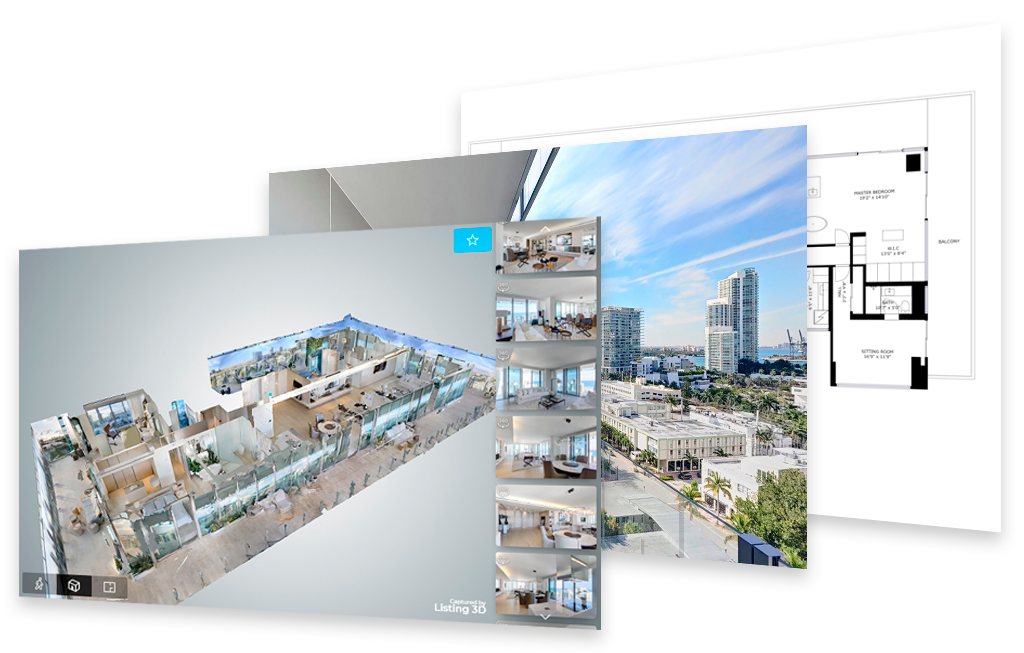
- Interactive floor plans — Real estate 360-degree virtual tours are floor plans you can navigate and explore in 3D. They let viewers tour homes, apartments, and buildings, examining their characteristics and learning about their architecture. In return, the buyers gain a deeper understanding of the layout and structure of the space.
- High-resolution images and videos — Because of the way they’re created, 360 virtual tours offer a high level of detail. Viewers can zoom in and out on every corner and study it from top to bottom. As a result, buyers will have an in-depth understanding of the space and make fully informed decisions about purchasing it.
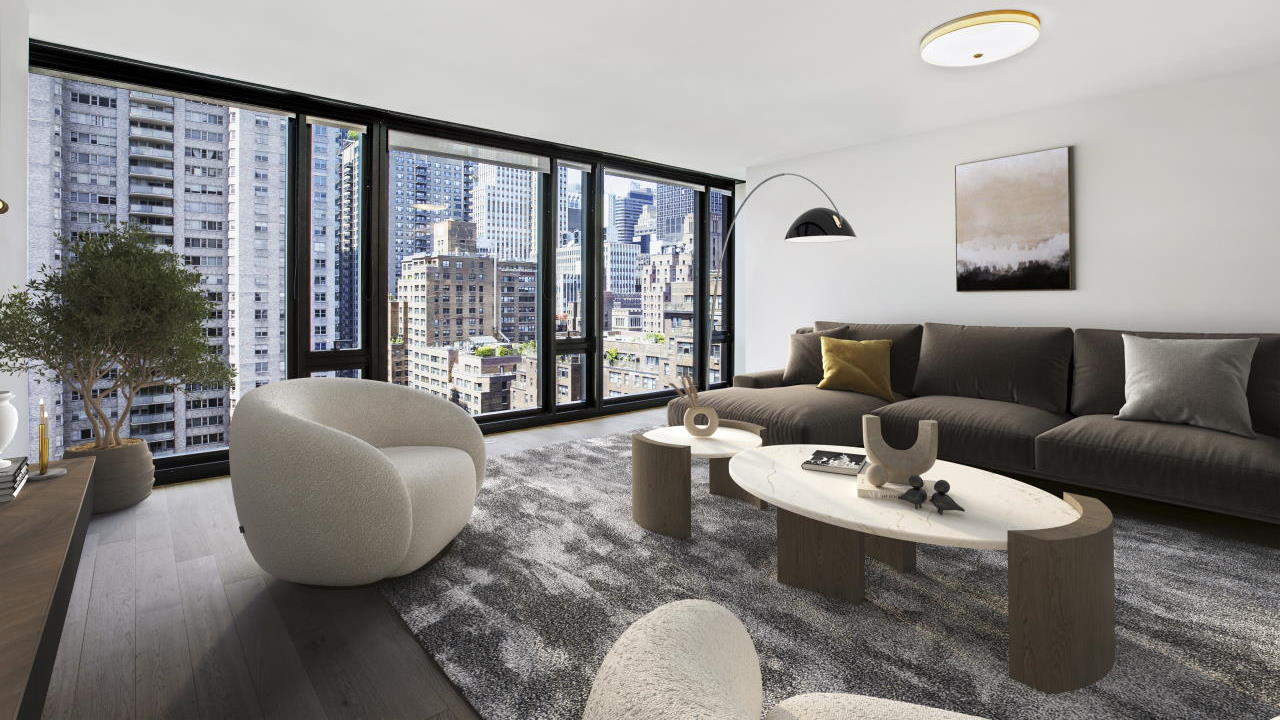
- Virtual reality capabilities — Virtual tour software allows you to paint, furnish, and decorate any room, apartment, or house, regardless of its current physical state. Realtors use it to enhance their unfinished or unfurnished property listings and present them in their best light.
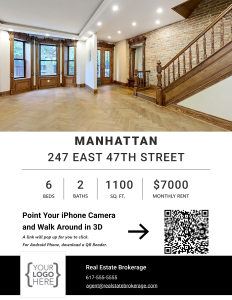
- Custom branding options — Real estate panoramic virtual tours leave plenty of room for customization. They let you embed your company’s watermarks and logos or attach links to your website or contact information. These details add a sophisticated touch to your listings and set them apart from the competition.
Real Estate 360 Virtual Tours’ Benefits
360-degree home and apartment tours are advantageous in many ways. However, their true value lies in their numerous benefits for buyers and sellers. For your convenience, we’ve outlined the most important below.
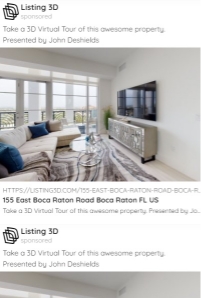
- Exposure — Virtual tours are digital documents realtors can attach to their online listings, upload to their websites, and post on social media. These internet platforms let millions of people tour your properties every day. As a result, your properties reach a wider audience, and your company enjoys greater exposure.
- Efficiency — Panoramic virtual tours are famed for their time-saving properties with realtors and clients. With professional help, sellers can get the finished digital product, upload it to their websites, and start receiving offers within a few days. Buyers don’t have to take time off work or schedule appointments to view properties. They can tour places that interest them whenever they want online.
- Cost-effectiveness — Creating a 360 virtual tour of a property is less expensive than making a standard one. The realtors don’t have to waste money and time renting furniture and decor or staging the tour. Their virtual tour provider handles all these tasks using software, allowing for more customization and detail. The completed virtual tour is not only more effective than standard versions are, but it’s also longer-lasting. You can use the render while the property is for sale and once it’s sold to enhance your marketing campaign.
- Credibility and trust — 360-degree virtual tours are a modern real estate marketing method. Including them in your listings or websites will help your business establish a better online presence and solidify its authority on the market. On top of that, it’ll show your clients you’re open to innovation and ready to cater to their needs

Real Estate 360 Virtual Tours vs. Traditional Photography and Videography
As mentioned, 360 virtual tours aren’t the first of their kind. For a long time, realtors used traditional photos and videos to help buyers visualize properties. Photos were printed or arranged into slideshows buyers viewed manually. Videos showed the realtor walking through the space, showcasing its layout, structure, and unique qualities.
Convenience-wise, these methods were a big step up from physical visits and in-person tours of the sites. However, both were very limited. The static photos didn’t have the cohesion traditional property tours had. Videos worked better in that sense, but they narrowed the tour to one perspective. The buyers could not control what they saw or focus on features they found important.
The emergence of real estate virtual tours solved both problems. Potential buyers could explore properties in a 360-degree view, change angles and perspectives, zoom in and out on details, and tour the space as long as they like. They didn’t have to schedule showings or visit the property in person. Because 360 virtual tours were available online around the clock, viewers could tour the place at their convenience using any device.
Real Estate 360 Virtual Tours for Different Types of Properties
Property 360-degree virtual tour is a highly flexible architectural rendering method. Real estate agents can use it to display various spaces, from single rooms and small apartments to residential and commercial buildings. Find out more about those options below.
Residential and Vacation Properties
Most 360 virtual tours showcase residential and vacation properties. They’re an easy, convenient, and cost-effective way to enhance home and apartment listings and reach clients. These tours can depict both the interiors and exteriors, illustrating:
- Traffic flow
- Room layout
- Furnishing and decoration capabilities
- Landscaping
- Front and backyard
- Surrounding areas and neighborhoods
Commercial Properties
The commercial real estate market is one of the most competitive branches in this industry, hence the importance of virtual tours. These digital representations of commercial locations help business owners and investors gain a better understanding of space. When coupled with other media like links, hotspots, availability, rates, and more, virtual tours also:
- Maximize real estate businesses’ exposures
- Attract potential leads’ attention
- Raise brand awareness

New Construction Projects
The versatility of a 360-degree virtual real estate tour is one of its primary advantages. This method provides buyers with a chance to tour houses, apartments, or buildings under construction or renovation. It lets customers see these properties’ full potential, point out mistakes, and request customizations before completion.
Real Estate 360 Virtual Tours Pricing and Packages
For a single listing, order a tour package at listing3d.com/order. For brokerages, Listing3D+ is a membership at $300 to $1,250 per month by agent count, and every agent in the brokerage buys the full media menu — 3D tours, DSLR photos, drone, video, and floor plans — at member prices, 35% to 50% off.
Conclusion
360-degree virtual tours are among the most popular methods successful real estate businesses use in marketing campaigns. These digital renditions offer panoramic views of the interiors and exteriors of commercial and residential properties online. They allow buyers to tour these places on their schedule and from the comfort of their homes, saving money, time, and energy.
Panoramic virtual tours also provide sellers with an easy, cost-effective, and modern way to showcase their listings and drive traffic, building credibility and increasing sales along the way. If you like how this sounds, don’t waste more time. Check out our service offer and schedule your first real estate 360 virtual tour today.
FAQ
How does a 360 virtual tour work?
Real estate 360-degree virtual tours are panoramic representations of a property. They allow potential buyers to virtually tour properties at any time and place through desktop and mobile devices. The tours help them gain insight into properties’ designs, structures, layouts, and other features.
What’s the difference between 360 virtual tours and video tours?
Panoramic virtual tours and video tours both offer visual property walkthroughs. However, they do so in different ways. The former let viewers navigate and look at the virtually-rendered space from multiple angles at their own pace. The latter feature linear, full-motion videos of a location showing a single view of the space at a set speed.
Why should I hire professional 360 virtual tour services?
Do-it-yourself virtual tours are viable, but they aren’t as effective as professional ones. Without skills and proper equipment like laser-scan cameras or rendering software, they can look amateurish and patchy.
Can a 360 tour show on Zillow and StreetEasy?
Yes, when delivered in a format the portals display. Listing3D is an approved vendor for 3D tours on Zillow and StreetEasy, and every tour is built to show there. Test the live listing page on desktop and mobile after syndication.
Where the tour has to show up
A tour only earns its keep if buyers can find it where they are already looking. It belongs on the listing page itself, on Zillow and StreetEasy, on the brokerage site, and in social posts that point back to the listing. If it lives in only one of those places, most of its audience never sees it. For vacant listings, virtual staging inside the tour can make the walkthrough read as furnished.
For brokerages: standardize the tour across every agent’s listings with a Listing3D+ membership. One standard for how listings are presented, member pricing on every order, and a media program agents actually use — which is why brokerages also use it as a retention tool.
Related reading: What is a Virtual Tour in Real Estate?
Related reading: How to Do Virtual Tours for Real Estate.
Related reading: What is Matterport?
Related reading: Why ADA Compliant Tours are the Key to Reaching a Full Audience in Real Estate
Related reading: Enhance Buyer Engagement with Personalized AI Avatars in Virtual Tours: A Game-Changer for Real Estate Agents
Related reading: Revolutionize Your Listing Presentation with Virtual Open House 2.0 and Win More Listings
Related reading: The Benefits of Virtual Leasing: An Introduction
Related reading: Things to Consider When Buying or Renting Virtually
Related reading: What it was like to buy a condo on FaceTime
Related reading: Virtual Reality: The Future of Retail
Related reading: Revolutionize Listings with the Matterport Virtual Staging Bundle!
Related reading: 3D Tour or Agent-Led Video Tour? Why Not Both?
Related reading: How 3DApartment Has Revolutionized the Renting Experience
Additional Services
Take Your Marketing Even Further


Additional Features at no cost
Part of any package

Press






Easy and Fast
Easily differentiate yourself from your competitors with our 3D Marketing Package. What used to be very expensive, is now affordable.
-
Pingback: Virtual Staging Inside the 3D Tour: How Vacant Listings Stop Looking Empty - Listing3D Insights
-
Pingback: Interior Design Rendering for Real Estate: Cost, Process, and How Agents Sell Unbuilt Space (2026)